
Introduction
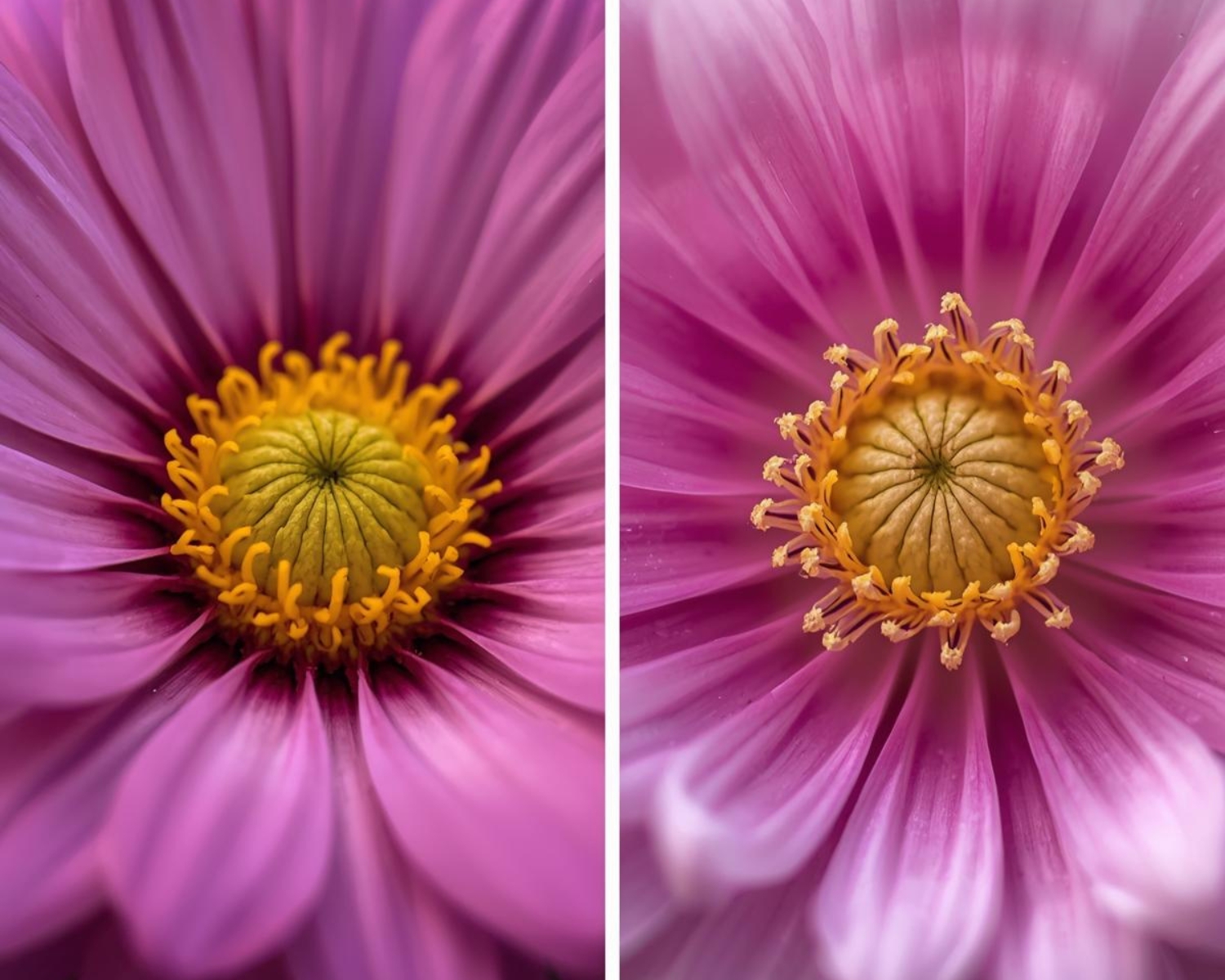
While the terms “close-up photography” and “macro photography” are often used interchangeably, they represent different approaches to capturing small subjects. Understanding the distinctions between these two styles is important if you’re looking to elevate your photography and create sharp, detailed images of tiny subjects. Let’s break down the differences and explore the unique qualities of each.
1. Magnification and Scale
The primary difference between close-up and macro photography lies in magnification.
- Close-up photography refers to capturing subjects from a relatively short distance, but the image is still smaller than life-size. You might use a standard lens to photograph flowers, food, or insects, and while these subjects appear larger in the frame, they are not captured at life size.
- Macro photography, on the other hand, involves capturing subjects at a 1:1 magnification ratio or greater. This means the subject will appear life-sized on the camera’s sensor, or even larger in the final image. Macro lenses allow photographers to capture incredible details that would otherwise be invisible to the naked eye, such as the texture of a bug’s wings or the veins on a leaf.
2. Depth of Field
Another significant difference lies in the depth of field (DOF). Due to the higher magnification in macro photography, the depth of field becomes extremely shallow. This means that only a small portion of the subject will be in focus, requiring careful attention to focus and technique. Close-up photography, with its lower magnification, usually offers a shallower depth of field, making it easier to keep more of the subject in focus.
3. Equipment
The equipment used for close-up photography is typically more straightforward. A standard camera lens with a close-focusing capability can handle most close-up shots. For macro photography, however, you’ll need a dedicated macro lens, designed for extreme close-ups and high magnification.
4. Usage and Subjects
Both styles are used to photograph small subjects, but macro photography excels at revealing incredible detail in objects like insects, flowers, and textures. Close-up photography is often used for food, still life, and everyday objects where extreme magnification isn’t necessary.
Conclusion
In summary, close-up and macro photography differ in magnification, depth of field, equipment, and subject matter. Understanding these differences will help you choose the right approach for your photography and achieve the best possible results.
#PhotographyTips #MacroPhotography #CloseUpPhotography #PhotographyTechniques #CreativePhotography #PhotographyEquipment #PhotographyCommunity #NaturePhotography #Photographers #ContentCreation
