
Introduction
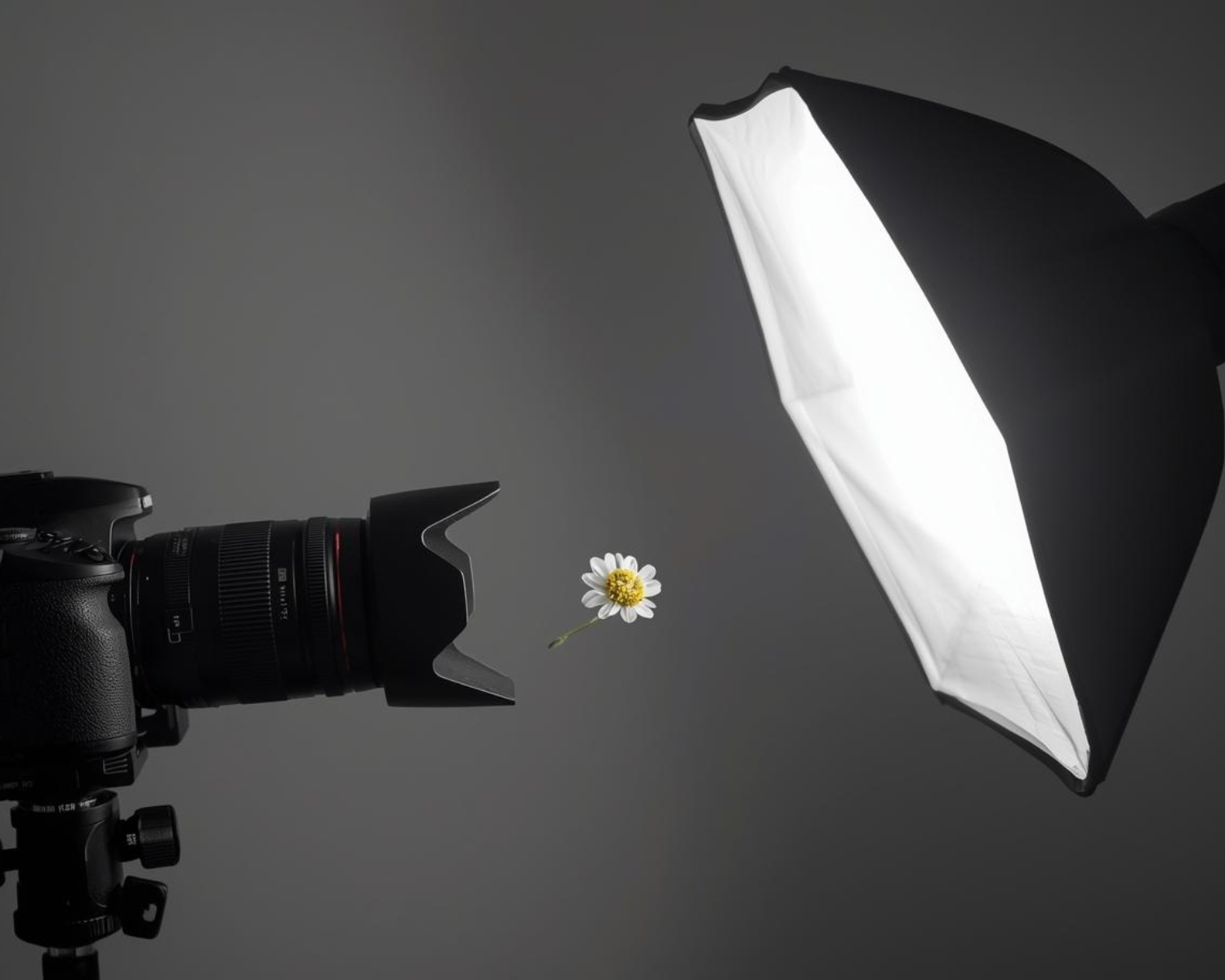
Lighting is one of the most critical elements in macro photography, especially when capturing the fine details of tiny subjects like flowers, insects, or food. Diffusers and reflectors are essential tools for controlling and manipulating light, creating balanced, professional-looking images. These tools help to soften harsh shadows, enhance highlights, and ensure your subject is well-lit without causing overexposure. Here’s how to effectively use diffusers and reflectors in macro photography.
1. Using Diffusers to Soften Light
In macro photography, natural light can often be too harsh, causing sharp shadows and overexposed highlights. A diffuser is a tool designed to soften and spread light evenly over your subject. It works by scattering light, reducing intensity, and creating a soft, even glow that enhances textures without causing overly stark contrasts.
To use a diffuser effectively, position it between your light source (usually a window or artificial light) and the subject. The diffuser should be placed at a distance that allows light to pass through and soften before reaching the subject. For smaller subjects, such as a flower or a small food item, a handheld diffuser or a portable softbox works well. The soft, diffused light highlights intricate details such as the texture of petals, the moisture on a fruit, or the sheen on a piece of metal.
2. Using Reflectors to Fill Shadows
While diffusers soften light, reflectors help bounce it into shadowed areas, brightening dark spots without additional light sources. This is particularly useful in macro photography, where small details and textures in the shadows are just as important as those in the highlights.
A reflector can be used to direct natural or artificial light onto the subject from a different angle. You can use a white, silver, or gold reflector, depending on the effect you want. A white reflector gives a soft, neutral bounce of light, while a silver reflector intensifies the light and adds contrast. Gold reflectors can provide a warm tone, which works great for food photography, giving the image a sunlit look.
3. DIY Options
While professional diffusers and reflectors can be pricey, there are many DIY alternatives you can use. A simple piece of white fabric or tracing paper can serve as a diffuser, and a large sheet of aluminum foil can be used as a reflector. These inexpensive tools can provide effective results without breaking the bank.
Conclusion
Diffusers and reflectors are essential tools for macro photographers who want to control light and highlight the intricate details of small subjects. By using a diffuser to soften harsh light and a reflector to brighten shadows, you can achieve more balanced, professional-looking images. These simple techniques allow you to capture the beauty of tiny details in a way that is both visually striking and natural.
#MacroPhotography #PhotographyTips #LightingTechniques #DiffusersAndReflectors #PhotographyGear #CreativePhotography #PhotographyTools #CloseUpPhotography #ProductPhotography #ContentCreation
